


FIND NOVEL GENETIC SIGNATURES AND/OR BIOMARKERS FOR EARLY DETECTION OF HUMAN DISEASES.
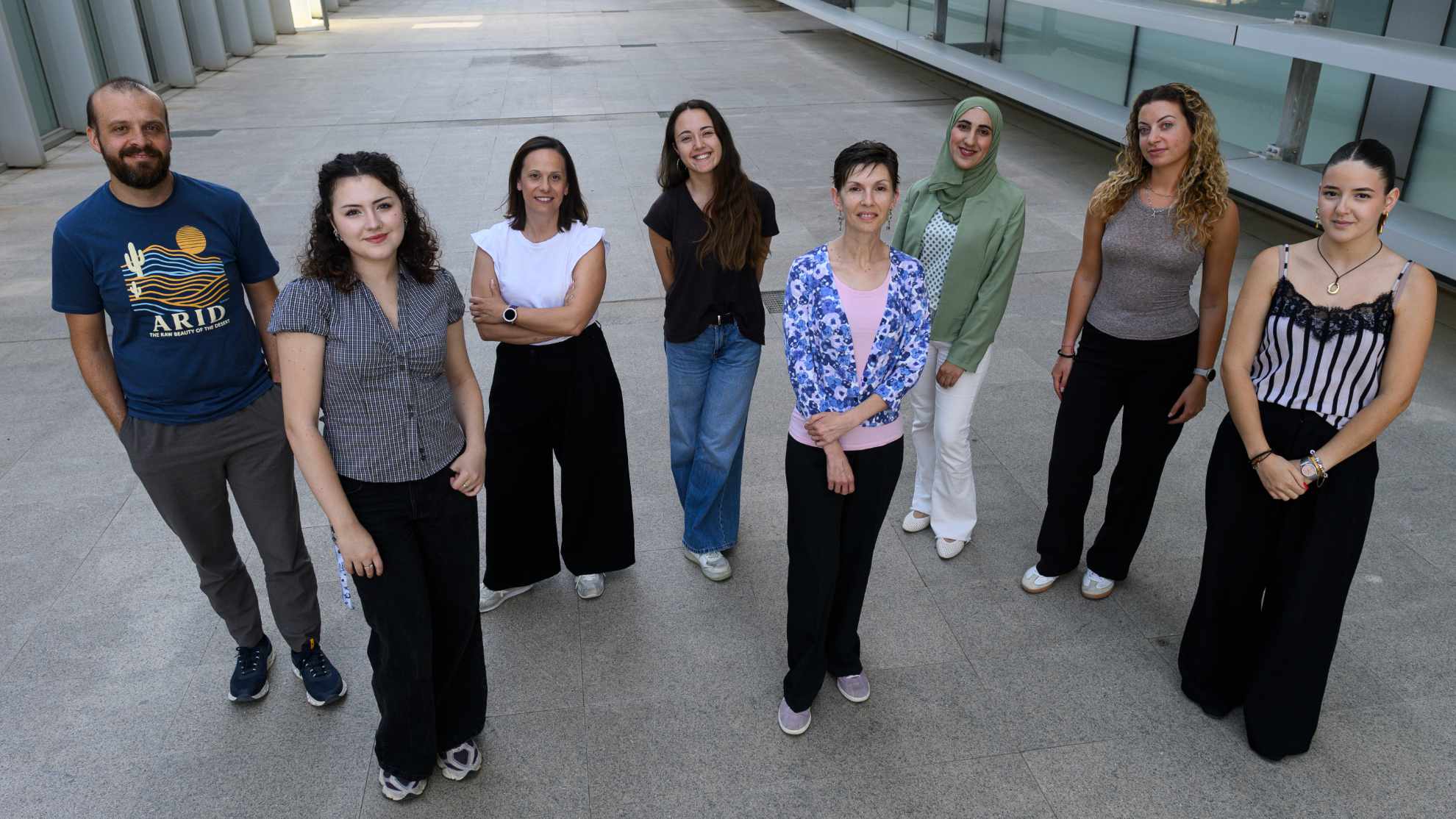
Juanes lab is a multicultural and multidisciplinary laboratory. Our lab is focused on delineating the mechanisms involved in cytoskeleton remodeling during collective cell migration and cancer invasion, and their relationship to disease phenotypes. In addition, we investigate how metabolic alterations drive cancer disease. To that end, we identify novel genetic signatures and/or biomarkers, including metabolites, for the early detection of human cancer diseases and assist the development of personalized therapies.
Our lab exploits genetic (specific separation-of-function mutants) or pharmacological tools in a multi-pronged approach across scales, from reconstituted proteins to in vivo mouse models.
This research will advance an emerging field by defining the molecular mechanisms that underlie a host of fundamental biological processes, which will serve as signatures for the early prevention of cancers and assist in the design of new therapies.
PRESENTATION
GET TO KNOW US BETTER
-

Own image of the laboratory
-
Own image of the laboratory
-
-
-
-


RESEARCH STAFF
THE PEOPLE WHO MAKE IT ALL POSSIBLE
María ángeles Juanes Ortiz
majuanes@cipf.es
Salvador Meseguer Llopis
smeseguer@cipf.es
Desamparados Andrés Bordería
aandres@cipf.es
Kexin Jiang Chen
kjiang@cipf.es
Rabe'ah Amre M. Almhassneh
ralmhassneh@cipf.es
Mohammed Moustapha Anwar Abdallah
manwar@cipf.es
Irene Olivas Cano
iolivas@cipf.es
PUBLICATIONS
OUR SCIENTIFIC CONTRIBUTIONS
Tumor invasiveness is regulated by the concerted function of APC, formins, and Arp2/3 complex.
iScience 2024 May, DOI: 10.1016/j.isci.2024.109687, Vol. 27, pag. 109687-109687
APC-driven actin nucleation powers collective cell dynamics in colorectal cancer cells.
iScience 2023 May, DOI: 10.1016/j.isci.2023.106583, Vol. 26, pag. 106583-106583
Cytoskeletal Control and Wnt Signaling-APC's Dual Contributions in Stem Cell Division and Colorectal Cancer.
Cancers 2020 Dec, DOI: 10.3390/cancers12123811, Vol. 12, pag.


